Streaming fundamentals
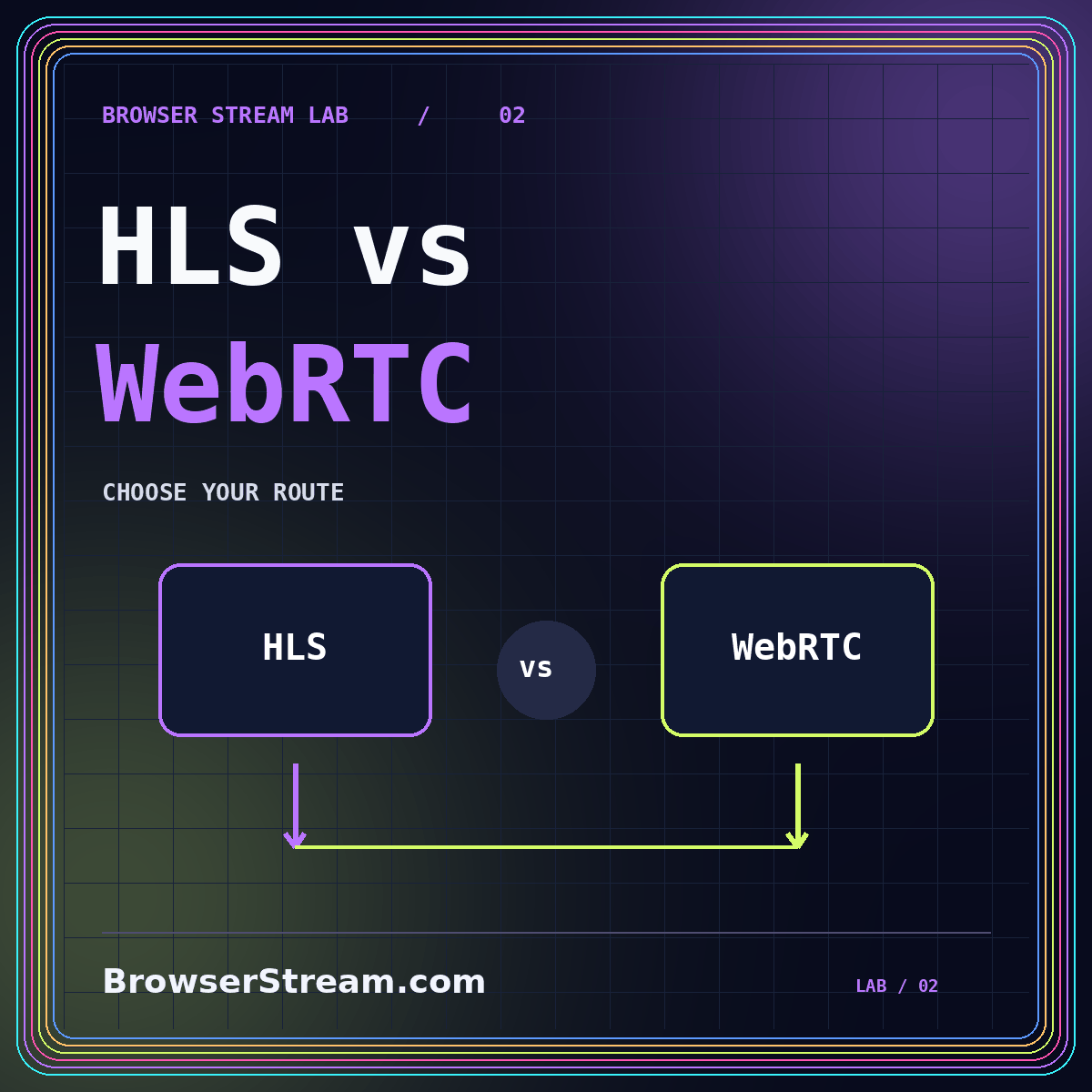
HLS vs WebRTC: choose a livestreaming route
Compare interaction, joining, recovery, captions, and operating responsibility before choosing your delivery path.
LAB COLLECTION / 2 ARTICLES
Understand the media journey before choosing a browser or delivery service.
A familiar play button can hide several different jobs. Watching a recording, joining a live broadcast, and participating in a conversation should not be evaluated with the same checklist. This collection begins with the source-to-screen path and then looks at the choices behind a live event. The aim is to give you a usable mental model, not a vocabulary test.
Begin with the introductory guide when the parts of the workflow are still unclear. Move to the HLS and WebRTC comparison once you can name the audience, its role, and the fallback you need. Keep your notes tied to the real devices and services you will use. A protocol label is useful context, but your rehearsal should decide whether the experience actually serves its audience.
Compare interaction, joining, recovery, captions, and operating responsibility before choosing your delivery path.
Understand the source-to-screen journey, choose the right workflow, and run a useful first test.
Before comparing products, write down whether viewers only watch or also contribute, whether the event needs replay, and who will help when joining fails. Use those answers as acceptance criteria. A smaller workflow that passes the important tests is preferable to an elaborate setup whose responsibilities nobody has assigned.
Use a topic guide for a focused starting checklist, then return here for the full walkthrough.
A better browser stream begins with a better question.